A new conversation about healing and hope after child sexual abuse.
The Quilt Model - a non-linear framework for healing from child sexual abuse, built and led by lived experience.
The current approach isn't working.
More than a billion people alive today experienced sexual violence as a child. In England and Wales, 500,000 children are sexually abused every year. The majority will never access support or tell anyone. Those that do are met most often with a response that requires them to heal in a specific way, to cope and recover almost entirely on their own. The assumption built into our existing methods of working with trauma assumes that healing is linear. Globally, systems are fragmented, and when children are visible they and their families become responsible for navigating and moving services around them rather than services alongside them.
We need to do something about that. And that conversation starts here.
Introducing the Quilt Model.
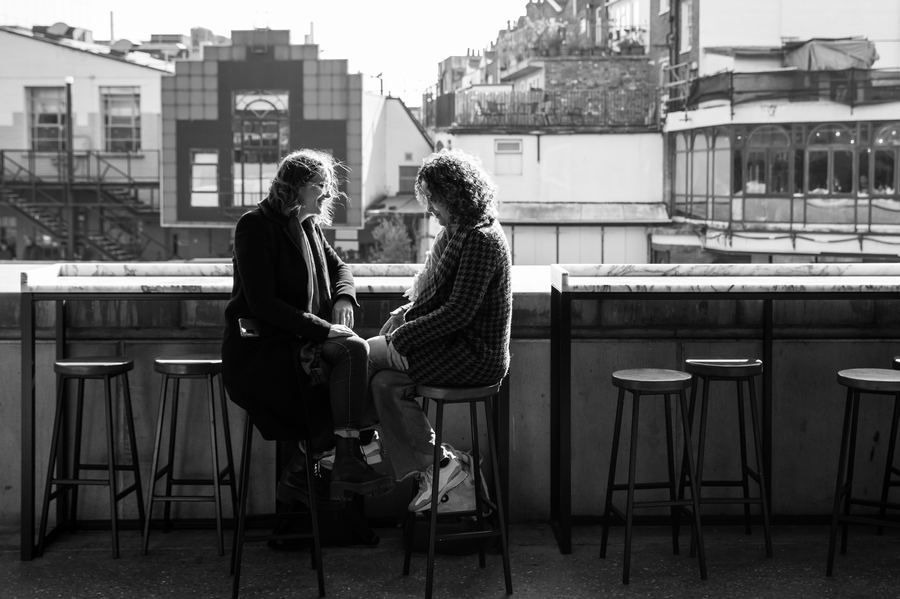
The Quilt Model was developed by Candice Harris and Gemma Halliwell, best friends, practitioners and survivors of child sexual abuse. They met at a research conference and spent years walking, talking, and building something new.
It starts from a different place. Not what has happened to a child, but what does a child already have within them to hold something other than the story of their abuse. They believe, and the evidence supports this, that every child has an inherent ability to heal. And that the role of families, practitioners, and communities is to move alongside them, not to move them along.
The Quilt Model started with a visual. When Candice and Gemma were explaining to practitioners, parents and young people that a person is more than their abuse. They are a friend, a sister, someone who loves music or animals or ice cream. The image of the quilt gave people an understanding of the different parts of themselves that they could learn to explore again.
Think of a quilt laid flat, all patches present at once, all equally real, all part of the same whole. The model has six patches: Junction, Abyss, Exposure, Stuck, Love, and Fortitude. They are not stages because there is no hierarchy in how we heal. We can hold hope and pain at the same time.
Junction
A point where one or more things are joined
Learn more →Abyss
A deep or seemingly bottomless chasm
Learn more →Exposure
The state of having no protection from something harmful
Learn more →Stuck
Unable to move from a particular position or place
Learn more →Love
An intense feeling of deep affection
Learn more →Fortitude
Strength of mind that enables a person to meet danger, bear pain or hardship with courage
Learn more →How we work with you.
Training & Speaking
Lived experience-led training for multi-agency practitioners and keynote speaking at international conferences.
Find out moreSupervision & Consultancy
One-to-one practitioner supervision, group reflective practice, and organisational consultancy.
Find out moreCourses for Young People & Families
Teaching services to run a 12-session peer-led programme rooted in the Quilt Model.
Find out moreParticipation & Co-production Support
The Presence course, consultation for services, and 1-1 mentoring for young people working through activism.
Find out moreInternational speakers. Practitioners who have changed how we talk about trauma.
Candice and Gemma start from the belief that every practitioner already has within them what children need most. Their training doesn't hand down a toolkit - it starts a conversation.
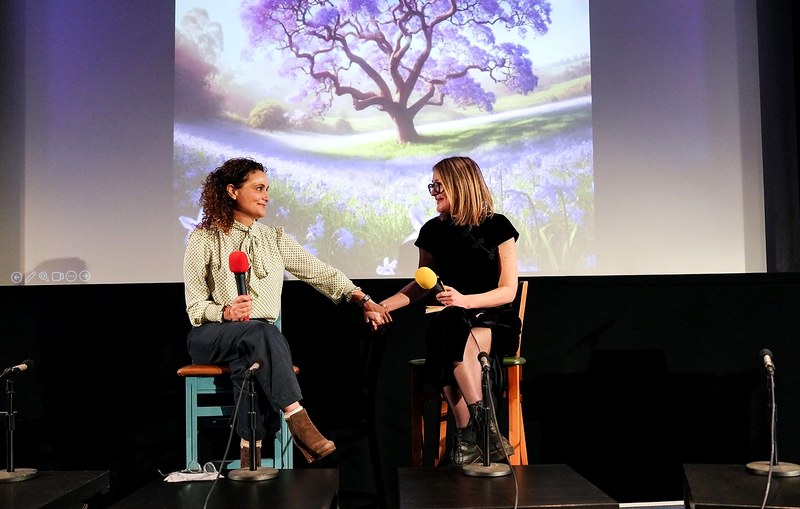
Conversations We've Never Had.
Our podcast raises the voices of survivors of child sexual abuse. It's for survivors, those who love them, and those who work alongside them.
Keep up with the conversation.
Start a conversation.
If something here resonates, whether you're a practitioner, a service, or someone looking for a different kind of support, we'd love to hear from you.
They met at a research conference. They've been walking and talking ever since.
The Quilt Model started in a friendship, in a profound and painful understanding of the ongoing impact of child sexual abuse. From that friendship, Candice and Gemma keep returning to the conversations about what healing really means, what children really need, and why the systems built to help them so often fall short.
As survivors of child sexual abuse, practitioners, leaders, they know that their greatest learning comes from their lived experience, the latest evidence-base and from the young people, parents, carers and families they have the privilege of working alongside.
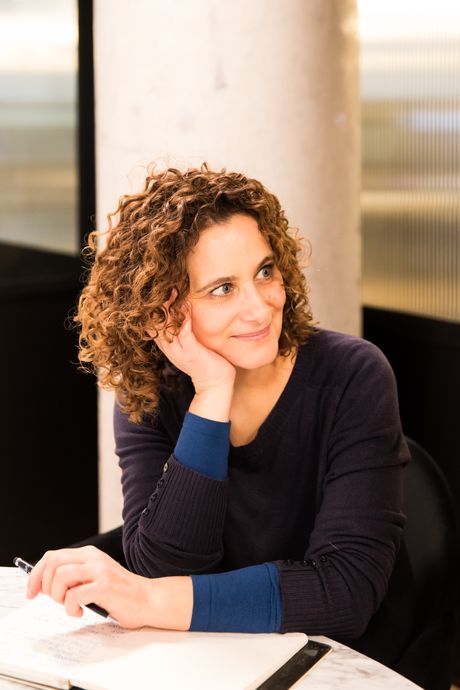
Candice Harris is a Lived Experience Leader in the international child sexual abuse sector. She is an author, actor and co-host of Conversations We've Never Had. She was chronically sexually abused as a child, and she has spent her career finding a way to talk about the impossible while holding onto hope.
Her book Indescribable is written in the ages she was abused. Published in South Africa in 2010 and internationally by Quartet Books, it has been praised by the Guardian as an unflinching lesson in honesty and is used by medical and psychology professionals as a resource for understanding how children experience sexual abuse. It is one of the most honest accounts of surviving childhood sexual abuse that exists.
She works alongside families whose children have been sexually abused, co-designing and co-facilitating therapeutic groups for non-abusing parents and children, and partnering with clinical specialists to create supportive, compassionate spaces. She delivers trauma-informed training across paediatric teams, police services, and children's mental health services. She brings to all of it something that can't be taught, the ability to articulate the ugliness of child sexual abuse, while equally holding onto possibility for every young person.
Candice is currently the Lived Experience Lead at the Bluestar Project and was previously a Lived Experience Consultant at the Light House London, the first Barnhaus (Child House) in the UK. She is an internationally recognised speaker, presenting at conferences like the Council of Europe. Candice was named as one of the Top 10 Most Powerful South African Women by Oprah Magazine 2010.
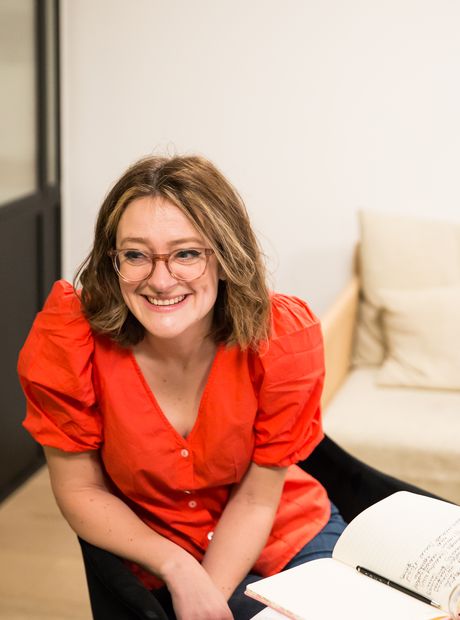
Dr. Gemma Halliwell is a researcher, leader in the sexual violence and abuse sector, and a survivor of child sexual abuse and domestic abuse. That experience sits at the heart of everything she does.
She is a Research Fellow at the University of Bristol. She has published widely in peer-reviewed research and her work spans domestic violence, psychological abuse, substance misuse and the evaluation of services for sexual violence.
In her time as Chief Executive of the Green House, a specialist charity providing evidence-based creative arts support for children, young people, and families impacted by sexual abuse, she led the development of a whole family model (GSK Award Winning) that is recognised as a national blueprint for sustainable, choice-led support.
She is also Co-Director of the Bluestar Project (CYP Now Award Winning), whose research, training, and accreditation work has driven key policy changes to ensure that survivors of trauma have access to care and support throughout the criminal justice process pre-trial.
Together with the Bluestar Project and the Green House, Gemma co-founded the Festival of Activism Against Child Sexual Abuse, designed to support policy change through activism led by young people and their families. She has extensive experience of designing and delivering participation, co-production and change-making spaces for young people looking to work within the sexual violence sector or through activism.
Gemma delivers training, reflective spaces and supervision to practitioners alongside Candice and co-hosts the podcast Conversations We've Never Had. She leads from hope, and from the conviction that healing is not something that happens to people, it's something that happens between them.
A friendship that became a framework
They met at a research conference. Two people with different stories, but the same desire, a belief that young people and families deserve to heal, and to hold on to the possibility of that.
What grew from that meeting was a friendship that has never separated the personal from the professional, because they don't believe those things should be separated. They are open about the role that shared laughter and walks that turn into long conversations play in navigating lifelong trauma. They talk about it because they think it matters. Because they know it does.
They didn't set out to build a framework. They set out to talk. Separately, but connected, until something emerged that neither of them could have built alone. The Quilt Model grew out of their podcast and out of that ongoing, honest conversation. It is theirs together, in the fullest sense.
Shared lived experience is the foundation of everything they do, not as a backdrop to the work, but as the reason for it. Their friendship is built on so much more than what brought them together: on the same hopes, the same humour, the same deep desire to walk alongside young people and families as they discover other parts of themselves.
If healing starts anywhere, it starts with connection.
Junction
A point where one or more things are joined.
Every healing journey starts with a connection. Not a referral form, not a waiting list, not a risk assessment. A connection. Two human beings in the same space, willing to be there together.
Candice and Gemma chose this word because their own story started with a conversation. And what it taught them above everything else is that connection is not a specialist skill. It belongs to all of us, regardless of our role or our training.
The research is clear: what matters most in supporting survivors is not the specific type of therapy, but choice, readiness, and connection. Junction is where that begins. And it can begin anywhere. A classroom, a corridor, a cup of tea.
Abyss
A deep or seemingly bottomless chasm.
This is the part nobody talks about. It's the time before a disclosure, when the abuse may still be happening, or has stopped, but nothing has been said. It's holding something so dark and so heavy that you don't yet have the words for it.
Services are almost never present in the abyss. By the time a child comes into contact with support, practitioners are always trying to get back to this moment, trying to understand what happened in the silence. But the silence itself, the weight of the secret, can feel bigger than the abuse. It creates a fragmentation of self that can last a lifetime.
The abyss can't be fixed or rushed. But having a word for where you are can be the first small movement out of it. Awareness is the beginning. And finding light in simple moments can often carry us out.
Exposure
The state of having no protection from something harmful.
Candice and Gemma chose Exposure over Disclosure deliberately. Disclosure sounds contained, a single moment dealt with and moved on from. But the truth is we are always having to tell our stories, over a lifetime, whether verbally or not. There is a noise and an emotional nakedness that comes with telling. And the system that's supposed to hold you in that moment often makes it worse.
When a child tells someone what has happened to them, a domino effect begins. Police, social care, prosecutors, waiting lists. Each step can take more control away from the child rather than returning it. What we want for every child in that moment is someone who looks up. Someone who is curious. Not about the abuse, but about them.
Practitioners don't need to have all the answers in exposure. They need to see the child, not the horror of the story. That simple act, being present, being kind, asking what their favourite subject is, can be a first point of healing.
Stuck
Unable to move from a particular position or place.
Children cannot be fixed. Children are not broken. And the impacts of abuse, physical, mental, social, do not simply go away. There is always a propensity, on any given day, to feel stuck. That's not failure. That's what living alongside trauma actually looks like.
Stuck is one of the two patches society and practitioners most avoid talking about, because it challenges the idea that healing has a finishing line. But if we don't give children and young people the language and the understanding that these impacts are real, ongoing, and held in the body as much as the mind, we leave them alone with something enormous and nameless.
Practitioners get stuck too. That's not a weakness. It's a patch of the quilt, just like any other. The question isn't how to avoid stuckness. It's how we hold it, acknowledge it, and keep going alongside the people we work with.
Love
An intense feeling of deep affection.
Love is an unfashionable word in services. It can feel too soft, too much, too hard to put in a policy document. But Candice and Gemma use it deliberately, because the opposite of child sexual abuse is love. And if we aren't willing to name that, we are not being honest about what this work is.
Love in the Quilt Model is broader than relationships. It's love for bubble gum ice cream. For a cat purring. For writing, for animals, for a piece of music that catches you off guard. These small things are not trivial. For many survivors, they are the things that held them together. They are handholds out of the abyss.
Young people who have been hurt are capable of love, even when they can't feel it. The job of practitioners, family members, and communities is to hold it for them until they can.
Fortitude
Strength, willpower and courage. Strength of mind that enables a person to meet danger or bear pain or hardship with courage.
This patch isn't about resilience. Resilience implies you always have to be strong, always bouncing back. Fortitude is different. Fortitude is being able to sit with both your vulnerability and your strength, and not run from either. It is holding all the patches, including the dark ones, at once.
For Candice and Gemma, fortitude is activism. Not the loud, visible kind necessarily, though that matters too. It's the quiet daily kind. Making a cup of tea. Showing up. Leading an organisation. Raising a child. Fortitude looks different for every person, and all of it counts.
You cannot do this work alone. Fortitude is where you learn to hold your whole story, all the patches together, and still move forward. Not away from the pain, but alongside it.
Working With Us
Everything Candice and Gemma do is rooted in the Quilt Model. The Quilt Model is the thread running through all of it.
Training & Speaking
Lived experience-led training for multi-agency practitioners internationally, and keynote speaking at international conferences.
Find out moreSupervision & Consultancy
One-to-one practitioner supervision, group reflective practice, and organisational consultancy.
Find out moreCourses for Young People & Families
Teaching services to run a 12-session peer-led programme rooted in the Quilt Model.
Find out moreParticipation & Co-production Support
The Presence course, consultation for services, and 1-1 mentoring for young people working through activism.
Find out moreTraining & Speaking
Lived experience-led training rooted in the Quilt Model, delivered internationally.
Candice and Gemma deliver lived experience-led training rooted in the Quilt Model to multi-agency practitioners internationally, including police, social care, schools, children's mental health services, and specialist services. They also speak internationally at conferences as keynote speakers.
Their training is not a set of tools handed down from a stage. It is a conversation. It starts from the belief that all practitioners have the skills to contribute to a child's healing journey - the ability to connect, listen and be kind. The goal is to help them trust that, and to build on it.
They work with the fear that is so present in society and services. The fear of saying the wrong thing, of not knowing enough, of making things worse. They name it rather than paper over it, because they know from their own experience as survivors and practitioners that the fear that goes unacknowledged finds its way into the room anyway.
Training is drawn directly from the Quilt Model and can be tailored to your team, your context, and where you are right now. No two sessions look the same. Areas covered include responding to disclosures, understanding the impacts of child sexual abuse, working with families and young people, the role of lived experience, practitioner wellbeing and stuckness, and multi-agency approaches to healing.
Supervision & Consultancy
Space for practitioners to talk about the work - honestly, and without a clinical script.
Working with child sexual abuse is hard. Practitioners working in this space can struggle to put down the stories of the children, young people and families they support, and most do not have nearly enough space to talk about what it is actually doing to them.
Candice and Gemma offer one-to-one supervision to practitioners working with children, young people, and families who have experienced child sexual abuse, and to practitioners working with adult survivors of sexual abuse. Sessions are grounded in the Quilt Model and led by the practitioner's own experience, using reflective conversation rather than a clinical script.
They also offer group reflective practice using the Quilt Model, available within systems across agencies or within individual organisations. These spaces create the conditions for honest, supported conversation about the work.
They work with organisations wanting to embed the Quilt Model more deeply into their practice and culture, by building Team Charters that can support cultural change through open conversations.
Sessions are available online or in person. If you are not sure what you need, just start a conversation and they will work it out together.
Courses for Young People & Families
The Quilt Model was built for young people and families. This programme brings it directly to them.
Candice and Gemma teach services to run a 12-session course for young people and for parents and carers, peer led rather than clinically based. Sessions explore the six patches, offer language for experiences that have often felt impossible to name, and create space for people to be heard alongside others who understand.
The course can be co-facilitated by Candice and Gemma alongside services to build confidence with group delivery for children, young people, and parents and carers. It is available online or in person.
They also consult with services who want to develop and run their own versions of this programme, supporting them to do it in a way that is young person led.
Participation & Co-production Support
Starting from connection, not change-making.
Too many participation programmes for young people and families start from the wrong place. They start from question-asking, from wanting something from the people they work with, from an action-only based approach. Candice and Gemma start somewhere different. They start from connection.
The question that shapes everything they do around participation is this: can you be present? Not can you contribute, just can you be here for yourself and then others. Because when people feel genuinely present, heard and connected to their community - then healing can begin alongside change-making.
They offer consultation to services that want to set up participation and co-production spaces for the families and young people they support. That means helping you think through how to create spaces that are creative, hopeful and non-hierarchical, and led by the people in them rather than the agenda of the service. They draw on the Quilt Model throughout, and on what young people and families have told them over years of listening.
They teach a 12-week participation course called Presence, which starts with connection and moves through participation, co-production and into leadership approaches for change-making. Presence is based on their extensive experience of setting up participation groups and making national change through their own activism.
They also offer one-to-one mentoring for young people who are working to make change through activism in their own way.
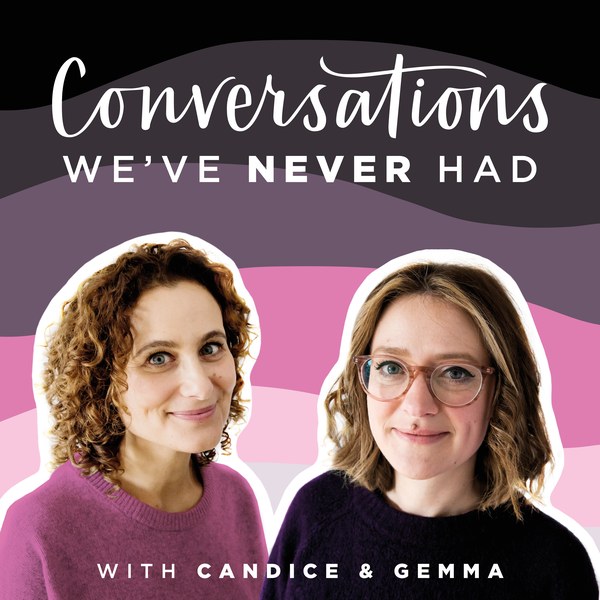
Conversations We've Never Had
A podcast raising the voices of survivors of child sexual abuse. For survivors, those who love them, and those who work alongside them.
Candice and Gemma felt it was critical to have a conversation that society is afraid to hear. About the fear and silence that lives inside us as survivors, in our families, communities and services.
The podcast is for survivors, those who love them and work alongside them. It is a way of connecting the conversation together but can also be used as a training tool. It is about helping young people to realise that it is possible to move forward alongside their story.
Learn more about each patch
Our first season explores all six patches of the Quilt Model. Each episode goes deeper into one patch - what it means, what it feels like, and why it matters. Start here to understand the framework.
Where every healing journey begins - the power of connection and conversation.
The silence before disclosure - the weight of holding something unspoken.
The vulnerability of telling - and what survivors need in that moment.
How trauma lodges in the body and why stuckness is not failure.
Why the opposite of child sexual abuse is love - and what that means in practice.
Sitting with vulnerability and strength at the same time - and moving forward.
Recent episodes
Loading latest episodes...
What listeners say
Keep in touch.
Candice and Gemma work with practitioners, services, and organisations across the UK and internationally. Join the mailing list to hear about new episodes, events and resources, or reach them directly on the channels below.
Email Us
Support our work
The Quilt Model is independent, self-funded work. Everything on this site, the podcast, the resources, the thinking, exists because Candice and Gemma have built it alongside everything else. If this work has meant something to you and you'd like to help us keep it going and growing, you can buy us a coffee, so that we can keep walking and talking.